
When Kids Internalize Stress: Subtle Signs Parents Often Miss

Updated: Sep 22

Editorial update: Originally published in December 2025, this guide has been expanded with practical ways to recognize quiet stress, begin conversations, support children at home and school, and decide when additional help may be appropriate.
When a Child’s Stress Stays Quiet
The beginning of a school year can reveal changes that were difficult to see during summer.
A child who seemed relaxed during summer may develop stomachaches before school, spend hours on a short assignment or return home exhausted and irritable despite appearing cheerful all day.
School is not always the cause. Quiet stress can grow around friendships, family changes, grief, activities, health concerns, social comparison or self-imposed pressure. Several smaller demands may also accumulate.
The school-year transition simply creates a useful moment to pay attention.
Parents may expect distress to look like crying, outbursts, falling grades, school refusal or a clear statement such as, “I’m overwhelmed.” Some children show those signs. Others keep meeting expectations while struggling privately.
They follow directions, complete their work and avoid conflict. They may even be praised for being mature or easy to manage.
Because their distress disrupts little around them, adults may miss it.
A child does not need to be disruptive to be struggling.
What Does It Mean to Internalize Stress?
In mental-health research and clinical settings, “internalizing” describes difficulties directed inward rather than expressed mainly through visible behavior.
It can include worry, sadness, withdrawal, shame, physical complaints or harsh self-judgment—experiences that often remain private.
“Externalizing” describes more visible expressions such as aggression, defiance, impulsivity or disruptive outbursts.
These terms describe general patterns. They are not diagnoses, personality types or permanent categories.
A child may internalize stress in one setting and express it outwardly in another—remaining composed at school, then unraveling at home after days of quiet worry.
The visible reaction may simply mark the moment the child can no longer contain the strain.
Labels such as “internalizer” and “externalizer” can oversimplify a child and narrow how adults interpret behavior.
The more useful question is not, “What type of child is this?”
It is, “What might this child be experiencing, and what has changed?”
Internalized Stress Is Not a Diagnosis
Quietness, perfectionism or physical discomfort does not automatically indicate anxiety, depression, trauma or another mental-health condition.
Children can become worried, private or irritable after poor sleep, illness, conflict, new responsibilities or changes in routine. Age and development also shape what behavior is expected.
Internalized stress is an observable pattern, not a conclusion. It may be temporary, temperamental or connected to a mental-health, developmental, learning, social or medical concern.
Parents do not need to determine the diagnosis before responding supportively.
Parents can notice changes, invite conversation, gather observations from other adults and watch whether the pattern resolves or begins limiting the child.
This avoids both pathologizing ordinary feelings and dismissing persistent distress because the child is still functioning.
Why Quietly Struggling Children Are Easy to Miss
Adults naturally notice behavior that interrupts a classroom or family routine. Silent worry rarely demands the same immediate response.
This difference affects who receives attention.
A quiet child may complete assignments, attend activities and agree with friends while concealing how much worry, effort or fear each task requires.
Outward success can conceal the amount of effort required to maintain it.
Some Children Do Not Have Words for the Experience
Children may sense a problem without knowing how to describe it.
“I don’t know” may be honest. A child can feel a tight stomach, racing thoughts or an urge to escape before recognizing worry, shame, sadness or overload.
Difficulty naming an emotion is not deliberate concealment. Emotional language develops gradually and becomes harder to access when a child is activated or exhausted.
Some Children Fear the Consequences of Speaking
A child may fear disappointing adults or triggering an intervention. They may think discussing school will bring a teacher meeting or admitting overwhelm will cost them an activity they value.
They may also fear appearing weak, difficult or ungrateful.
Consider what the child expected speaking up would cause.
Some Children Protect Other People
A child who sees a parent managing other pressures may stay quiet to avoid adding another concern.
This does not mean the parent caused the distress; the child may underestimate what adults can manage.
Self-sufficiency can be an attempt not to become another problem.
Competence Can Hide Distress
Good grades, responsible behavior and social participation do not guarantee emotional ease.
Some children manage stress by overpreparing and trying to eliminate mistakes. Achievement may reduce fear briefly without resolving it.
Adults see the result, not always the belief that success and agreeableness are necessary to avoid criticism or disappointment.
Caring about success is not the concern. Believing ordinary mistakes are unacceptable is.
Quiet Temperament or Cause for Concern?
Some children naturally prefer solitude, observe before joining and need quiet after demanding days.
These traits do not need correction.
Reserved children should not be pushed to perform extroversion. Quietness alone does not indicate low self-esteem, anxiety or distress.
Parents can distinguish temperament from concern by considering change, persistence, impact and overall functioning.
Look for Change
Has the child become quieter, more avoidant or more self-critical?
Longstanding solitude may fit the child’s temperament; abrupt isolation or abandonment of favorite activities may signal something different.
Compare the child with their own baseline, not with siblings or classmates.
Look for Persistence
Is the pattern continuing for weeks?
Watch whether the concern eases, persists, spreads to other settings or becomes more intense.
Look for Interference
Is it affecting sleep, eating, school, friendships or activities?
A child need not be failing before support is appropriate, but interference with ordinary life warrants closer attention.
Look for Distress
How much discomfort is the child experiencing?
One child may recover quickly from nerves; another may lose sleep, feel ill beforehand and replay the experience for days.
Participation does not reveal the full burden.
Look for Safety Concerns
Self-harm, suicidal thoughts, threats, abuse or feeling unsafe require immediate attention—not dismissal as moodiness or a phase.
Avoid Searching for a Single Explanation
Once parents notice a pattern, they often feel pressure to identify its cause.
Is it school, friendship, social media, academic pressure or something at home?
Sometimes the cause becomes clear; often it does not.
School avoidance can reflect bullying, separation anxiety, learning difficulty, sensory overload, exhaustion, illness, fear of failure or an undisclosed experience.
Physical complaints may have medical causes. Withdrawal may reflect recovery needs, relationship strain, low mood or discomfort in one setting.
Certainty can close the conversation before the child explains their experience.
Begin with:
“I have noticed something seems different, and I want to understand—not assume.”
Parents can stay attentive without investigating every detail. Ask without demanding disclosure, take physical symptoms seriously and seek observations from teachers, caregivers, coaches, pediatricians or mental-health professionals when needed.
The goal is to understand the pattern well enough to respond safely—not to uncover one hidden cause immediately.
A Parent’s First Role Is to Notice
Parents do not need perfect language or a diagnosis before offering support.
Start with the basics:
Notice changes.
Notice timing.
Notice where the child relaxes or becomes tense.
Notice whether rest and connection help them recover.
Notice what they may be working to conceal.
Careful observation helps parents respond to a pattern rather than react to one moment.
Next, consider how the pattern appears at home, school, with friends, during activities and in the child’s body.

How Quiet Stress Can Appear Across a Child’s Life
Internalized stress can look different across settings.
A child may speak freely at home but become silent elsewhere.
Another child may perform well at school, then become overwhelmed at home. Others stay composed with adults while sleep, friendships or physical comfort change.
This variation can obscure the pattern. School may report success while home reveals significant strain.
Teachers, coaches and caregivers may each hold a different piece of the picture.
No single behavior proves internalized stress. Concern grows when changes cluster, persist or affect comfort and participation.
What Parents May Notice at Home
Home may be where children feel safe enough to release emotions contained elsewhere.
A child may arrive home and:
Become unusually irritable over ordinary questions
Withdraw immediately to a bedroom or quiet space
Cry without being able to explain what happened
Resist decisions about food, homework or evening activities
Seek repeated reassurance about the following day
Become distressed when plans change
Apologize excessively for minor mistakes
Need much longer than usual to recover from the day
These reactions do not prove something harmful is happening at school. Concentration, noise, transitions and social monitoring can leave little capacity for evening demands.
Timing still matters.
Patterns tied to a class, activity or interaction deserve attention. Distress after nearly every demanding day may reveal more strain than the child shows publicly.
A child who feels uncertain elsewhere may become rigid about clothing, food, schedules or routines to make one part of life predictable.
Stress may explain behavior without excusing harm. Parents can hold boundaries while addressing what contributes to the behavior.
What Quiet Stress May Look Like at School
Some students show distress through panic, attendance problems or falling grades. Others continue performing well, delaying recognition.
A child may:
Spend far more time than necessary on ordinary assignments
Repeatedly erase, restart or redo acceptable work
Avoid raising a hand despite knowing the answer
Become distressed by anything below their expected grade
Leave work unfinished because it never feels good enough
Ask the teacher repeatedly whether instructions were followed correctly
Avoid group work, presentations, lunchrooms or unstructured periods
Visit the nurse with recurring physical complaints
Become unusually quiet around a particular subject, teacher or peer group
Refuse help because needing assistance feels embarrassing
Agree to every request even when overloaded
Appear attentive while absorbing very little because worry occupies their attention
High achievement does not rule out distress.
Strong grades may require an unsustainable pace, lost sleep, abandoned activities or physical illness before evaluations.
A successful result can hide an unhealthy process.
Dedication is healthy; fear that one imperfect result will change the child’s worth or others’ regard is not.
Difficulty starting work may reflect fear, unclear instructions, learning or executive-function needs, exhaustion or several factors. Avoid labeling the child anxious, lazy or defiant.
Friendships Can Conceal Significant Pressure
Social stress may occur without obvious conflict.
A child may belong to a group yet constantly monitor messages, expressions and tone for signs of rejection.
A delayed reply or private joke may feel like proof of rejection.
Quiet social stress may appear as:
Agreeing with friends to prevent disagreement
Allowing others to make every decision
Remaining in friendships that regularly feel hurtful or unequal
Worrying intensely about being left out
Replaying conversations for possible mistakes
Asking repeatedly whether someone is upset
Changing interests, clothing or opinions to match a group
Avoiding invitations because rejection feels worse than not trying
Withdrawing after an embarrassing or painful interaction
Keeping bullying or exclusion private
Children may hide social difficulties from shame, vulnerability or fear that adult involvement will worsen them.
Not every friendship change is bullying.
Friendships naturally change, but sudden isolation, fear of certain peers, missing belongings, unexplained injuries or changes in sleep and eating deserve attention.
Activities Can Become a Source of Hidden Stress
Activities can build confidence and connection while also becoming places where children feel constantly evaluated.
A child who once enjoyed an activity may begin:
Complaining of illness before practices or meetings
Becoming unusually upset about small errors
Practicing beyond what was requested
Comparing their performance constantly
Watching a coach or instructor closely for signs of disappointment
Refusing to try a more advanced skill
Asking to quit without explaining why
Continuing despite no longer enjoying the activity because they fear disappointing someone
Possible contributors include internal pressure, peer conflict, exhaustion, an uncomfortable relationship, a demanding environment or changing interests.
Not every wish to quit is avoidance. Ask what changed, what the child expects and whether the environment feels reasonably safe.
Stress May Be Felt Before It Can Be Explained
Children often feel distress physically.
They may report:
Stomachaches or nausea
Headaches
Muscle tension
Fatigue
Difficulty falling or staying asleep
Nightmares
Changes in appetite
Dizziness or feeling shaky
A racing heart
Shortness of breath
A general feeling of being unwell
Physical symptoms are real even when stress contributes to them; do not dismiss them as imaginary or attention-seeking.
Do not assume emotions are the cause. Recurring pain, breathing problems, dizziness, disrupted sleep or appetite changes may need medical evaluation.
Notice timing: Sunday nights, school mornings, tests, one activity or one relationship. Symptoms across settings matter too.
A pattern informs; it does not diagnose.
Digital Life Can Keep Social Stress Active
For many children, the social day continues after school.
Group chats, gaming and social media can extend comparison and exclusion into evenings. Repeated checking, deleted posts or lost sleep may signal pressure.
Parents may notice:
Mood changes after checking a device
Anxiety when the phone is unavailable
Repeatedly reviewing messages
Sudden withdrawal from an online group
Concealing particular conversations
Comparing appearance, friendships or achievements
Sleep disruption connected to nighttime activity
Fear of attending school after something happened online
Immediate device removal may sometimes protect a child, but it can also erase evidence, connection or willingness to disclose.
First determine whether technology is providing connection, increasing pressure, exposing harm or doing several things at once.
Age Can Change How Distress Is Expressed
As language, independence and social life develop, the same difficulty can look different across ages.
Younger Children
Younger children may communicate through behavior and physical sensations more than explanation.
Watch for clinginess, changed play, bedtime problems, physical complaints, regression or intense resistance to separation and transitions.
Avoid leading questions. Instead of “Did someone scare you at school?” try, “You seem worried when it is time to leave. What does your body notice?”
School-Age Children
As academic and social expectations increase, distress may become connected to performance, belonging and comparison.
School-age children may become perfectionistic, reluctant to seek help, worried about disappointing adults or physically uncomfortable before tests and social situations.
Some also hide concerns because they know certain answers may prompt adult intervention.
Preteens and Teenagers
Older children can often explain their experience, but may still choose not to.
They may fear losing privacy or independence. Watch for irritability, isolation, sleep changes, fading motivation, perfectionism or sudden indifference toward once-important activities.
Because Full Circle already has a comprehensive guide to recognizing and supporting anxiety in teenagers, this article will not repeat its detailed teen-specific strategies. The important point here is that quiet distress can remain hidden at any age, even when an older child has the vocabulary to describe it.
Use Patterns, Not a Checklist Score
Parents need not count behaviors before taking concerns seriously.
A better review considers five dimensions:
Context
Where and when does the behavior appear? What tends to happen beforehand?
Frequency
Is it occasional, connected to a specific event or happening repeatedly?
Intensity
How uncomfortable, frightened or overwhelmed does the child appear?
Impact
Is it affecting sleep, eating, health, learning, attendance, friendships, family life or participation?
Recovery
Does the child recover with rest and support, or does distress continue?
Good days do not erase a pattern. A child can laugh, socialize and achieve while still struggling elsewhere.
Observing patterns replaces vague worry with useful information; it is not a case against the child.
With a clearer pattern, parents can approach the child without labeling, interrogating or pressuring them.

How to Talk With a Child Who Keeps Stress Inside
Recognizing a pattern does not mean a child is ready or able to explain it.
A gentle approach may still receive:
“I’m fine.”
“Nothing happened.”
“I don’t know.”
“Can you stop asking?”
These answers can frustrate a worried parent and intensify the urge to question or solve.
The first conversation need not uncover everything.
The goal is to show that the parent has noticed, can stay calm and will listen without immediately judging or taking control.
Choose a Moment That Reduces Pressure
Timing affects what a child can access and communicate.
After a demanding day, a child may need food, movement or quiet before questions. Arguments, rushed mornings and homework conflicts rarely invite openness.
Many children speak more comfortably during side-by-side activities:
Driving
Walking
Preparing food
Drawing
Folding laundry
Playing quietly
Sitting together before bed
Direct eye contact can feel supportive for some children and intense for others.
Choose a setting where the child does not feel trapped, observed or required to answer immediately.
If the adult appears panicked or determined to solve everything, the child may manage the adult’s reaction instead of speaking honestly.
Parents need not be perfectly calm—only steady enough to hear something difficult without making the child regret sharing.
Begin With an Observation, Not a Label
“You have anxiety.”
“You’re internalizing everything.”
“You’ve become withdrawn.”
These statements define the child’s experience before the child has described it.
A more open beginning connects the conversation to something observable:
“I noticed homework has been taking much longer than usual, even when you understand the assignment.”
“You’ve asked to stay home from practice three times this month. That seems different for you.”
“You seem exhausted when you come home, even on days that appear to go well.”
“I’ve noticed you apologize whenever you ask me for help.”
The parent can then invite the child’s perspective:
“What has that been like for you?”
“Do you have a sense of what makes that part difficult?”
“Am I noticing this accurately, or does it feel different to you?”
Leave room for correction. It shows the parent is trying to understand, not prove a theory.
Ask Less and Listen Longer
Concerned parents often ask several questions at once:
“What happened?”
“Did someone say something?”
“Is this about school?”
“Are you being bullied?”
“Why didn’t you tell me?”
The child may hear one message: I need to provide an explanation right now.
One clear question, followed by real silence, is usually more effective.
A parent might ask:
“Which part of the day has felt hardest lately?”
Then allow silence.
Silence may mean the child is searching for words, testing safety or deciding what they can share.
Advice given too quickly can turn understanding into correction, even when the solution is sound.
Useful listening responses are brief:
“Tell me more about that.”
“What happened next?”
“That sounds like it took a lot of energy.”
“I can understand why that stayed with you.”
“What do you wish had happened instead?”
The parent can check their understanding without claiming certainty:
“It sounds like the mistake itself was difficult, but worrying about everyone’s reaction was even harder. Is that close?”
This gives the child an opportunity to refine what the parent heard.
When the Child Says “I’m Fine”
“I’m fine” can mean many things:
The child is genuinely okay.
They are not ready to talk.
They do not know what they feel.
They fear what will happen after disclosure.
They want privacy.
They are exhausted.
They believe the concern is not serious enough to mention.
They are trying to end a conversation that feels overwhelming.
Arguing usually does not help.
“No, you’re not fine.”
“I can tell something is wrong.”
“You have to talk to me.”
These responses turn concern into a contest over who understands the child better.
A parent can remain attentive without forcing disclosure:
“Okay. I may be reading it wrong. I wanted to check because you seem different lately.”
“You don’t have to explain it right now. I’m available when you’re ready.”
“If talking feels difficult, you can write it, text it or tell me while we’re doing something else.”
“I’m going to check in again tomorrow—not because you’re in trouble, but because I care.”
Do not accept “fine” indefinitely if functioning or safety deteriorates. Keep observing without forcing immediate disclosure.
Ask What Kind of Support the Child Wants
Children may stop sharing when every disclosure triggers advice, intervention or rapid questioning.
Before acting, ask:
“Would you like me to listen, help you think through it, help you contact someone or give you a little space?”
A younger child may need simpler choices:
“Do you want me to listen, help or sit with you?”
The child’s preference matters, but safety, health, bullying, abuse or serious impairment may require adult action.
Offering choices gives the child meaningful participation and helps the parent address the actual need.
A friendship conflict may require comfort, an assignment may require a first step, and physical symptoms may require medical evaluation.
Accurate support begins with understanding the need.
Validate the Experience Without Confirming Every Conclusion
Validation recognizes the child’s real emotional experience without agreeing with every prediction.
Consider a child who says:
“Everyone will think I’m stupid if I answer incorrectly.”
Dismissal would sound like:
“That’s ridiculous. Nobody is paying that much attention.”
Confirming the fear would sound like:
“Then maybe you shouldn’t raise your hand.”
A validating response might be:
“Answering in front of the class feels risky because being wrong would be embarrassing. We don’t know what everyone would think, but I understand why it feels exposing.”
This acknowledges fear without treating the feared outcome as fact.
This distinction is especially important when the child uses absolute language:
“I always ruin everything.”
“Nobody likes me.”
“I can’t do anything right.”
The parent need not agree or debate the evidence in that moment.
Try:
“Something happened that left you feeling as though everything was your fault. Tell me about that part.”
Or:
“You’re feeling very alone right now. I want to understand what happened before that feeling became so strong.”
Respond to the experience first; examine the conclusion later.
Useful Responses for Common Moments
When a Child Is Harshly Self-Critical
Instead of:
“Stop saying that about yourself.”
Try:
“You’re speaking to yourself as though one mistake describes everything about you. What did this mistake mean to you?”
When a Child Fears Disappointing Someone
Instead of:
“Nobody is disappointed.”
Try:
“Whose reaction are you most worried about?”
This identifies whether pressure comes from others or the child.
When Physical Symptoms Appear
Instead of:
“It’s probably just stress.”
Try:
“The discomfort is real. We should pay attention to your body and when this happens.”
Take the symptom seriously and seek medical guidance when appropriate.
When a Child Wants to Quit
Instead of immediately insisting they continue or allowing them to stop, try:
“What changed between when you enjoyed it and now?”
“Is there something about the activity that feels unsafe, overwhelming or no longer right for you?”
“Are you trying to leave because you do not want the activity anymore, or because one part feels difficult?”
The answer may not decide immediately, but it improves the decision.
When a Friendship Feels Uncertain
Instead of:
“Just find better friends.”
Try:
“What happens in that friendship that leaves you feeling unsure?”
“Do you feel able to disagree or say what you need?”
“What are you worried would happen if you spoke honestly?”
These questions invite description instead of defense.
Responses That Commonly Shut the Door
Certain well-intended responses can make future disclosure less likely:
“You have nothing to be stressed about.”
“When I was your age, I dealt with much worse.”
“You’re overthinking.”
“Just ignore them.”
“You need to toughen up.”
“Why can’t you be more like your sibling?”
“I knew something was wrong.”
“I’m calling the school right now.”
“After everything we do for you, why are you unhappy?”
“You’re too young to be this stressed.”
These messages suggest that the child’s feelings are unreasonable, burdensome or unsafe to reveal.
Excessive reassurance can also backfire. “Everything will be fine” promises certainty a parent cannot provide. A steadier message is:
“I cannot promise that every part will be easy. I can promise that you will not have to handle it alone.”
Do Not Make the Child Responsible for the Parent’s Reaction
A disclosure may frighten, anger or sadden a parent.
The child should not have to comfort the parent first.
Statements such as “How could I have missed this?” can shift emotional responsibility to the child.
A steadier response is:
“Thank you for telling me. I’m taking this seriously, and we will decide what needs to happen.”
Parents can process their fear later with another trusted adult or professional.
Respect Privacy Without Promising Secrecy
Children need privacy, along with honest limits when safety is involved.
A parent should avoid promising:
“I won’t tell anyone.”
Safety concerns, abuse, self-harm, suicidal thinking or threats may require involving others.
A more accurate promise is:
“I will respect your privacy. If I believe you or someone else may be unsafe, I will need to involve another adult who can help. I will tell you what I’m doing and include you as much as possible.”
Honest limits protect trust better than a promise the parent cannot keep.
When Speaking Is Not the Easiest Route
Some children communicate more clearly through:
Writing a note
Texting a parent
Drawing
Using a feelings scale
Talking during movement
Speaking with another trusted adult
Answering one question at a time
Returning to the conversation in shorter pieces
Alternative communication can be just as meaningful as face-to-face conversation.
For teenagers, privacy and autonomy require additional care. Full Circle’s guide to talking with teens about mental health without pushing them away explores those age-specific concerns more deeply.
Repair the Conversation When It Goes Poorly
Parents will sometimes react too quickly, overquestion or offer unwanted advice.
That does not close the door permanently.
A parent can return and say:
“I realized I started trying to solve everything before I understood what you were telling me.”
“I reacted strongly because I was worried. You did not do anything wrong by telling me.”
“I asked too many questions at once. I would like to try listening again.”
Repair shows that relationships can recover from imperfect moments and makes future disclosure safer.
A useful conversation may end without a solution. The child can still leave knowing that honesty will not cost connection or dignity.
That safety supports the practical work of reducing pressure, strengthening routines and coordinating with other adults.
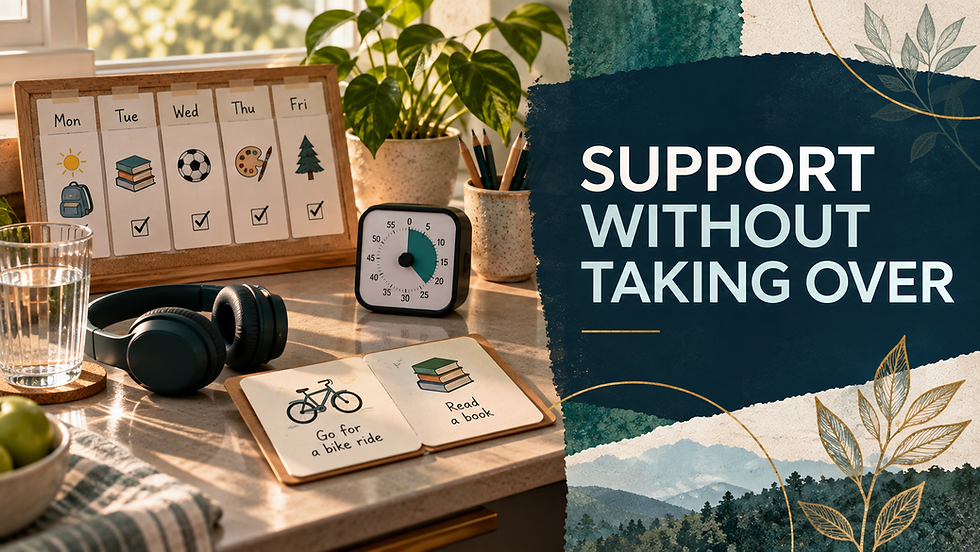
Practical Ways to Support a Child Who Carries Stress Quietly
After recognition and conversation comes a practical question:
What should change?
Support does not require reorganizing family life or removing every challenge. Reduce avoidable pressure, strengthen recovery and help with manageable next steps.
One child may need quiet after school; another needs help starting work; another needs an adult to investigate a learning, friendship or safety concern.
Use these strategies as starting points, not a formula.
Create a Predictable Landing Place
Children who stay composed through demanding situations may need reliable recovery time.
The same need for recovery can follow school, practice, social events, family gatherings or medical appointments.
A decompression period might include:
Food and water
Changing into comfortable clothes
Quiet time
Movement
Music
Drawing or building
A shower
Sitting near a trusted adult without talking
A familiar, low-demand activity
Decompression is not a reward for withdrawal. It helps the child regain enough capacity to communicate and problem-solve.
Parents can make the transition predictable:
“When you get home, you’ll have 20 minutes to settle. Then we’ll check what needs to happen this evening.”
The parent remains available and returns at the agreed time rather than leaving the child alone indefinitely.
Recovery may involve silence, movement, sensory input or connection. What matters is whether the routine restores capacity for the rest of the day.
Use Routines as Support, Not Control
Predictability reduces the decisions a stressed child must manage.
Helpful routines may include:
A consistent waking and bedtime range
A visible morning sequence
Regular opportunities for meals and snacks
A designated place for school materials
A realistic homework starting time
Advance notice before transitions
Protected time without performance demands
A brief evening review of the following day
Routines should ease daily life, not create another standard to fail.
Routines become stressful when every delay or change is treated as failure. Leave room for illness, fatigue and ordinary unpredictability.
Use visual schedules, written plans or reminders according to age, and involve the child in designing what will help.
Reduce Pressure Without Removing Every Challenge
Parents sometimes respond to hidden stress by becoming more demanding:
“You need to get used to it.”
“You cannot avoid everything.”
“You have to push through.”
Others move toward complete protection:
“You never have to do that again.”
“I’ll handle it for you.”
“You can stay home whenever it feels difficult.”
Both responses can miss the need.
Do not push a child into unsafe or abusive environments. But repeatedly escaping reasonably safe situations can make them feel increasingly impossible.
Before deciding whether to encourage participation, modify the situation or step away, ask:
Is the environment reasonably safe?
What specifically feels difficult?
Is the demand appropriate for the child’s age and abilities?
Does the child understand what is expected?
Is a learning, attention, sensory or health concern involved?
Would a smaller step make participation possible?
Is the child avoiding discomfort, or protecting themselves from harm?
A smaller step might be entering the building, completing one task segment, speaking to one trusted person or attending briefly before reviewing.
Help the child distinguish manageable discomfort from a situation that requires protection or change.
Adjust How Achievement Is Discussed
Children who internalize pressure may hear praise as expectation.
“You always get great grades.”
“You’re the responsible one.”
“You’re so talented.”
Sincere compliments can still make a child feel responsible for protecting an identity.
Parents can widen the conversation beyond outcomes:
“What did you understand better after working on that?”
“You noticed you were stuck and asked for clarification.”
“You stopped when the amount of effort no longer matched the importance of the task.”
“You made a mistake and stayed with it.”
“You were honest about needing help.”
Specific feedback highlights repeatable behavior and separates worth from one grade or performance.
Full Circle’s guide to building emotional resilience after setbacks explores growth, recovery and learning from mistakes more deeply. Here, the essential point is to notice whether praise is helping the child feel encouraged or increasing their fear of falling short.
Help With the First Step Without Taking Over
A quietly stressed child may understand a task yet feel unable to begin.
When a task feels large or loaded, a parent may take over answers, reminders or requirements.
That solves tonight’s problem while reinforcing the belief that the child cannot manage independently.
Help identify the smallest genuine first step.
“Complete the project” is not a first step.
A first action might be:
Read the instructions once
Highlight what is unclear
Open the document
Choose between two possible topics
Write one question for the teacher
Gather the necessary materials
Work for ten minutes and reassess
A parent can stay nearby without supervising everything.
Afterward, ask:
“What part could you manage independently?”
“Where did you actually need help?”
“What will make the first step easier next time?”
These questions identify the obstacle instead of assuming poor motivation.
Build a Regulation Menu Before It Is Needed
Coping strategies are hard to choose while overwhelmed.
A regulation menu is a short, flexible set of options practised during calmer moments.
Possibilities include:
A slower breath with a comfortable, longer exhale
Stretching
Walking
Pushing against a wall
Holding a comforting object
Listening to familiar music
Drawing or writing
Using cool water
Sitting in lower light
Reducing noise
Naming what the body can see, hear and feel
Spending a few minutes with a trusted person
Taking a brief, agreed pause from a task
No strategy fits every child. Breathing, touch or stillness may help one child and intensify discomfort for another.
Parents can ask:
“Do you want less sound, more movement, company or space?”
Regulation does not erase emotion; it creates enough steadiness for the next useful action.
Full Circle’s article about supporting children through emotional coaching provides additional guidance on helping children understand and express emotions. The quiet-stress plan should remain simpler: notice the child’s cues, offer a limited choice and avoid treating one calming technique as mandatory.
Protect the Basics Without Presenting Them as a Cure
Sleep, movement, nutrition and connection support well-being but do not cure anxiety, depression, trauma, bullying, learning difficulties or unsafe circumstances.
Parents can still review whether the child has enough opportunity to:
Sleep on a reasonably consistent schedule
Eat and drink throughout the day
Move their body
Spend time outside when possible
Participate in enjoyable, non-evaluated activities
Connect with supportive people
Experience periods without schoolwork, competition or digital monitoring
Play or create without producing a result
Tone matters.
“Go outside and you’ll feel better” can sound dismissive.
“You’ve been carrying a lot today. Would movement, food, rest or company help your body recover?” treats the child as a participant.
Persistent problems with sleep, eating or recovery may require more than routine changes.
Create Technology Boundaries Collaboratively
When online activity contributes to stress, intervention may be needed.
Match the intervention to the actual problem.
A family plan might address:
Devices during sleep hours
Notifications that interrupt homework or rest
Access to harmful accounts or conversations
What the child should do if someone threatens, harasses or pressures them
When a parent must become involved
How evidence should be saved before blocking or reporting
Which online relationships feel supportive
What level of privacy is appropriate for the child’s age and safety
Technology may carry harm and still provide friendship, identity support or access to trusted people.
The goal is not simply less screen time. It is safer, more intentional use.
Work With the School Without Making the Child Feel Exposed
When concerns involve school, observations from teachers and staff can clarify the pattern.
Begin by describing observations rather than offering a diagnosis:
“We have noticed that homework is taking much longer and that Sunday evenings have become difficult. What are you seeing during the school day?”
Useful questions include:
Has the child’s participation changed?
Are assignments being completed within expected timeframes?
Does the child ask for repeated reassurance?
Are there particular classes, transitions or unstructured periods that seem difficult?
Have there been changes in friendships?
Is the child visiting the nurse or asking to leave?
Does the child appear calm, tense, tired or unusually quiet?
What appears to help?
Have any teachers noticed a different pattern?
Tell the child what will be discussed and invite their view of what the school should understand.
A parent might say:
“I would like to ask your teacher whether they have noticed the same pressure around assignments. I won’t share every private detail. What feels important for them to know?”
Safety or serious impairment may limit the child’s control over communication, but they can still be included respectfully.
Build a Small School Support Plan
The first plan need not solve everything.
Depending on the child’s needs and the school’s available processes, possible supports might include:
A predictable check-in with one adult
Clarifying written instructions
Breaking a large assignment into stages
Identifying a quieter place for brief recovery
Advance notice of major transitions
A plan for missed work
A safer route for reporting bullying or harassment
Reduced public attention when the child needs assistance
A scheduled follow-up with the parent
Evaluation for formal supports when appropriate
These are examples, not automatic entitlements or universal recommendations.
Formal school supports follow specific eligibility procedures.
Use one point of contact when possible to reduce conflicting messages and the sense of being watched.
Define the trial, responsibility and review date.
Track Patterns Without Monitoring Every Moment
A brief record can distinguish one reaction from a pattern.
For seven days, record:
The situation
What happened immediately beforehand
What the parent observed
What the child reported
Any physical symptoms
How long the distress lasted
What appeared to help
Whether ordinary functioning was affected
Keep the record factual.
“Refused homework and cried for 15 minutes after reading the assignment” is more useful than “Was dramatic again.”
Keep tracking factual and limited. Its purpose is to support communication—not document every mood or interrogate the child.
Make One Change at a Time
When parents discover hidden stress, they may introduce multiple routines, meetings and appointments at once.
Too much support can become pressure.
Begin with the change most likely to reduce immediate strain:
Protect the transition after school
Adjust the homework starting process
Restore sleep time
Reduce one unnecessary commitment
Establish one predictable check-in
Contact one appropriate adult
Practice one regulation option
Schedule a pediatric or counseling consultation when warranted
Then observe the result.
The best plan is one the family can follow consistently and revise honestly.
If thoughtful adjustments do not reduce distress—or the child’s life becomes more limited—additional evaluation or professional support may be needed.

When Additional Support May Be Needed
Not every stressful period requires therapy. Many children recover from ordinary disappointment and change with time, dependable relationships and practical support.
Focus on whether the pattern persists, intensifies or interferes with daily life.
Consider professional guidance when:
Changes continue for several weeks rather than resolving
Physical complaints recur without a clear medical explanation
Sleep, appetite, energy or personal care changes noticeably
School attendance or academic functioning declines
The child increasingly avoids friends, activities or ordinary responsibilities
Perfectionism prevents them from beginning or completing tasks
Reassurance no longer helps them recover
They seem persistently hopeless, frightened, ashamed or irritable
Family life is increasingly organized around preventing their distress
The child says they want help or cannot manage what they are feeling
Parents need not wait for crisis or a full checklist. Consultation is appropriate when the pattern is unclear or home support is not enough.
Seeking guidance gathers better information; it does not presume a disorder.
Begin With the Right Starting Point
The best first step depends on the pattern.
Consult the Child’s Pediatrician
A pediatrician can evaluate recurring headaches, stomachaches, fatigue, sleep disruption, appetite changes and other physical symptoms rather than assuming they are psychological.
Bring a concise description of:
When the changes began
How frequently they occur
Situations in which they become stronger or weaker
Changes in sleep, appetite, energy or activity
Any physical complaints
Relevant school observations
Recent family, social or environmental changes
Strategies the family has already tried
A week or two of concise observations is often more useful than reconstructing months from memory.
Ask What Others Have Noticed
Teachers, counselors, coaches and other trusted adults may see parts of the child’s experience that parents do not.
A child may contain distress at school and release it at home.
Another may seem relaxed with family but withdraw during group work, lunch or activities. Both observations can be true.
Parents can ask:
“Have you noticed any recent change in participation or confidence?”
“Does my child seem comfortable asking for help?”
“Are there particular times of day or activities that seem harder?”
“Have there been changes in friendships, attendance or completed work?”
“What happens after my child makes a mistake or receives correction?”
“Is there anything you are seeing that would help us understand the larger pattern?”
Compare environments; do not ask the school to diagnose.
Consider a Mental Health Evaluation
A qualified professional can explore temporary stress, anxiety, depression, trauma, learning or attention needs, social problems, family strain and other contributors.
Evaluation may combine parent and child interviews, developmental and medical history, school information, screening measures and observation.
Screening can identify areas for closer attention but cannot establish a diagnosis by itself.
How Counseling May Help
Counseling is not a consequence for failing to cope. It offers a safe relationship for understanding stress and practising new responses.
Depending on the child’s needs, counseling may help them:
Recognize physical and emotional signs of stress earlier
Develop language for experiences that previously felt difficult to explain
Understand connections among thoughts, feelings and behavior
Tolerate mistakes, uncertainty and uncomfortable emotions
Practise asking for help before distress becomes overwhelming
Build coping strategies appropriate to their age and circumstances
Address experiences such as bullying, grief, trauma or family change
Strengthen communication with parents or caregivers
Gradually return to activities that stress has made difficult
A therapist can also help caregivers decide when to comfort, set limits, encourage a manageable challenge or step back.
In some situations, working with the family is more useful than treating the child as though the concern exists entirely inside them. Full Circle’s family counseling services are designed to help families improve communication, respond to emotional challenges and develop healthier ways of navigating stress together.
How to Introduce Counseling Without Creating Shame
How adults describe counseling shapes a child’s first impression of it.
Avoid presenting therapy as punishment, a threat or evidence that something is wrong with them:
“If you keep acting like this, I’m taking you to a therapist.”
“You clearly cannot handle this on your own.”
“You need someone to fix your anxiety.”
“Maybe a counselor can finally get you to talk.”
Instead, connect support to what the child has been experiencing:
“You have been carrying a lot lately. I think it may help to have another person on your team.”
“We have tried several things at home, and this still seems really hard. Let’s find someone who understands this kind of stress.”
“You are not in trouble. Counseling is a place where we can learn more about what has been happening and what might help.”
“You do not have to know exactly what to say in the first appointment.”
“We can ask questions together before deciding whether someone feels like the right fit.”
Older children and teenagers should have an age-appropriate voice in the process.
Offer reasonable provider choices, ask what would improve comfort and take concerns about fit seriously.
Choice means participation, not making an overwhelmed child arrange their own care.
Questions to Ask a Potential Therapist
Parents may want to ask prospective therapists:
What experience do you have working with children of this age?
How do you assess anxiety, withdrawal, perfectionism or physical expressions of stress?
How are parents or caregivers involved?
How do you protect the child’s privacy while keeping caregivers appropriately informed?
How do you coordinate with pediatricians or schools when needed?
What therapeutic approaches do you use, and why might they fit this concern?
How will we know whether counseling is helping?
What happens if my child is reluctant to talk?
How do you respond if a safety concern emerges?
Are sessions available in person, through telehealth or both?
Comfort can take time, but persistent dread, disrespect or absent trust deserves attention.
Parents can discuss the concern with the therapist and reconsider the fit when necessary.
When the Situation Is Urgent
Some circumstances require immediate action rather than continued observation.
Take it seriously if a child:
Talks or writes about wanting to die
Says others would be better off without them
Expresses an intention to hurt themselves or someone else
Engages in self-harm
Cannot be kept safe
Reports abuse or an immediate threat
Shows severe confusion, disconnection from reality or dramatically altered behavior
Gives away important belongings or says goodbye in an unusual way
Has access to a weapon or another potentially lethal means while in crisis
Ask direct questions when you are concerned:
“Are you thinking about hurting yourself?”
“Are you thinking about suicide?”
“Have you thought about how you would do it?”
“Do you have access to what you would use?”
“Are you thinking about hurting someone else?”
Direct questions do not plant suicidal thoughts; they invite honesty and help adults assess urgency.
Do not leave a child alone when there is an immediate safety concern. Reduce access to weapons, medications and other potentially lethal means when it is safe to do so. In the United States, call or text 988 or use the chat at 988lifeline.org for crisis support. Call 911 or go to the nearest emergency department when danger is immediate or the child cannot be kept safe.
Safety overrides promises of secrecy.
Frequently Asked Questions
Is internalizing stress the same as anxiety?
No. Internalizing is a broad pattern of less-visible distress. Anxiety is one possible explanation among depression, trauma, grief, bullying, learning difficulties and family strain.
Context matters; this article cannot diagnose an anxiety disorder.
Can a child seem happy and still be struggling?
Yes. Children can laugh, achieve and socialize while keeping significant distress private.
Do not assume every cheerful child is hiding pain—or that competence rules it out. Look for change, patterns and impact.
Should I keep asking if my child refuses to talk?
Keep the door open without making every interaction an inquiry.
A parent might say:
“You do not have to talk right now. I’m available when you are ready, and I will keep checking in because you matter to me.”
Ordinary connection through meals, rides, walks and low-pressure activities can make later conversation easier.
Seek guidance when functioning deteriorates or safety is uncertain, even if the child will not discuss it.
Am I overreacting by contacting a professional?
A consultation lets parents describe observations, ask questions and decide whether evaluation is appropriate.
Complete certainty is not required before seeking help.
What if the school sees no problem?
A calm school day does not prove comfort everywhere. Some children contain distress until they reach home.
Others struggle in less visible areas, such as lunch, unstructured time, peer interactions or the period before school.
Share specific observations and compare settings. Different reports are pieces of information, not proof that one adult is wrong.
What if my child’s stress seems minor compared with other children’s problems?
Children need not suffer more visibly than others to deserve support. Ask whether distress is narrowing the child’s life.
Comparison teaches minimization; curiosity improves understanding.

The Quiet Stress Parent Toolkit
Parents often notice important details but struggle to organize them when speaking with a school, pediatrician or therapist. The companion Quiet Stress Parent Toolkit
will provide a structured way to:
Track patterns for seven days without scoring or diagnosing
Compare what happens at home and school
Identify situations, physical signals and possible stressors
Prepare low-pressure conversation starters
Build a child-friendly calm plan
Plan after-school decompression
Communicate concerns to the school
Decide which level of support may be appropriate
Prepare questions for a prospective therapist
Review what is improving and what still needs attention
The toolkit supports observation and communication; it does not replace medical care, mental-health evaluation or emergency help.
Quiet Children Still Need to Be Seen
A child need not disrupt class or have a visible breakdown before their stress deserves attention.
Sometimes distress appears in the child who never wants to disappoint anyone.
Look for the child with Sunday-night stomachaches, the high achiever who cannot tolerate mistakes or the child who abandons favorite activities while insisting everything is fine.
Do not treat every quiet moment as a warning. Stay curious when meaningful change persists.
Notice patterns, make room for conversation, offer practical support, compare settings and seek guidance when distress persists or safety is uncertain.
Full Circle Counseling & Wellness provides compassionate support to individuals and families in Frankfort, Illinois, and surrounding communities. If your family is concerned about a child’s emotional well-being or needs help deciding what kind of support may be appropriate, you can contact Full Circle Counseling & Wellness to discuss the next step.
Sources
Sources reviewed and verified for this guide:



Comments